

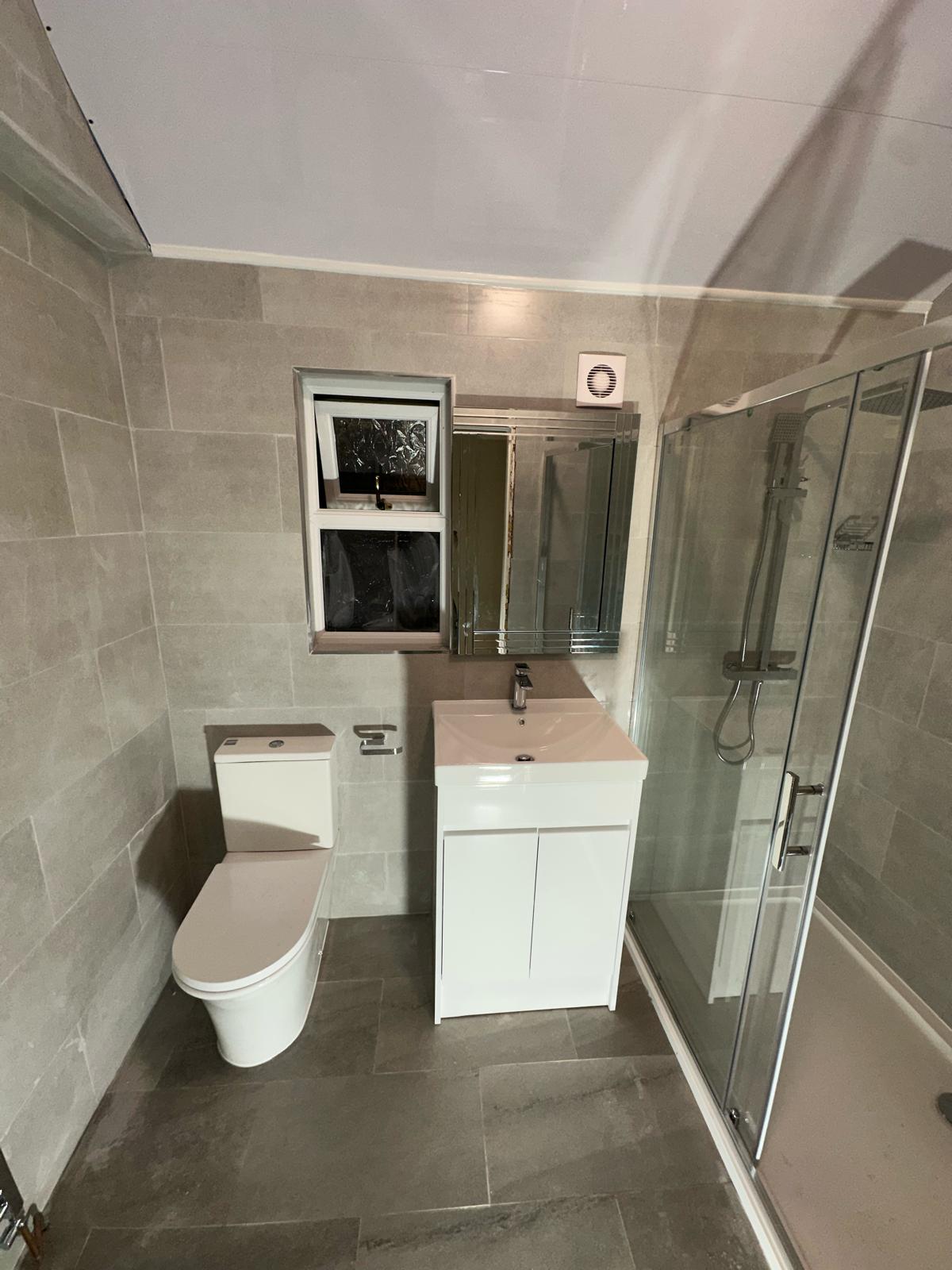
Effective ventilation isn't just about comfort; it's about protecting your home's structure and your health from mould growth.
The fan is humming, but the mirror stays foggy and dark spots keep returning to the grout. For homes in Bordesley Green, Stechford and Kitts Green, start by checking how moisture leaves the room — not by painting over it.
Three things to know.
- Keep steam contained in the bathroom while the extractor operates.
- Let the fan complete its normal run-on cycle after showering.
- Persistent damp needs a cause check, not another coat of paint.
Why condensation happens
Condensation occurs when warm, moist air from a shower hits a cold surface like a window or a tiled wall, turning back into water. If this water isn't cleared quickly, it leads to black mould, which can damage grout and plaster over time.
Repeated condensation needs a different response from a plumbing leak or penetrating damp. Note whether the moisture follows showers, appears around an external wall after rain, or persists while the bathroom is unused. That pattern helps an installer investigate the right cause.
Is your extractor fan actually working?
A running fan can still have restricted airflow. From floor level, look for dust on the visible grille and listen for a change in sound. A tissue lightly held near the grille can suggest suction, but it cannot prove the required airflow or that the duct ends outside. Do not climb on wet fittings to reach it.
Look at any safely visible outside outlet from ground level. Report a damaged or obstructed outlet; do not reach into it or disturb nests. An installer can check the full duct route and airflow.
Renovating? Check the ventilation design
In England, Approved Document F provides guidance on ventilation. The applicable edition and requirements depend on the project and building; a new bathroom is not automatically governed by exactly the same arrangements as an existing room.
Ask your installer how the extract air reaches outside, how replacement air enters the room and how the fan is controlled. A window can help clear steam, but it is not a reason to overlook the ventilation specification. Have the actual airflow checked rather than choosing a fan by its advertised output alone.
Safe checks for homeowners
Try these maintenance steps before considering a replacement:
- Keep existing trickle vents open and unobstructed.
- Wipe accessible wet screens and tiles after showering.
- Clean only the accessible exterior grille following its instructions, with the fan switched off; do not remove electrical parts.
When to call a professional
A fan that stops, smells burnt or makes a new grinding sound needs professional attention. Staining or dripping around it can indicate a duct or water problem. Arrange an electrician or suitable installer rather than removing the unit yourself.
Do not attempt to modify the ducting yourself if it involves cutting through external walls or roof tiles, as this can affect the structural integrity and weatherproofing of your home.
For appliance-specific steps, follow your boiler or product manual. Work inside a gas boiler must be left to a Gas Safe registered engineer.