No heating on a freezing morning doesn’t always mean a broken boiler. An external condensate pipe can freeze and stop it running. Here’s how to recognise the problem without opening the boiler.
Three things to know.
- Apply warm water to the external pipe, never boiling
- Insulate external pipes to prevent future freezing
- Ensure the pipe has a steady fall to the drain
How to tell
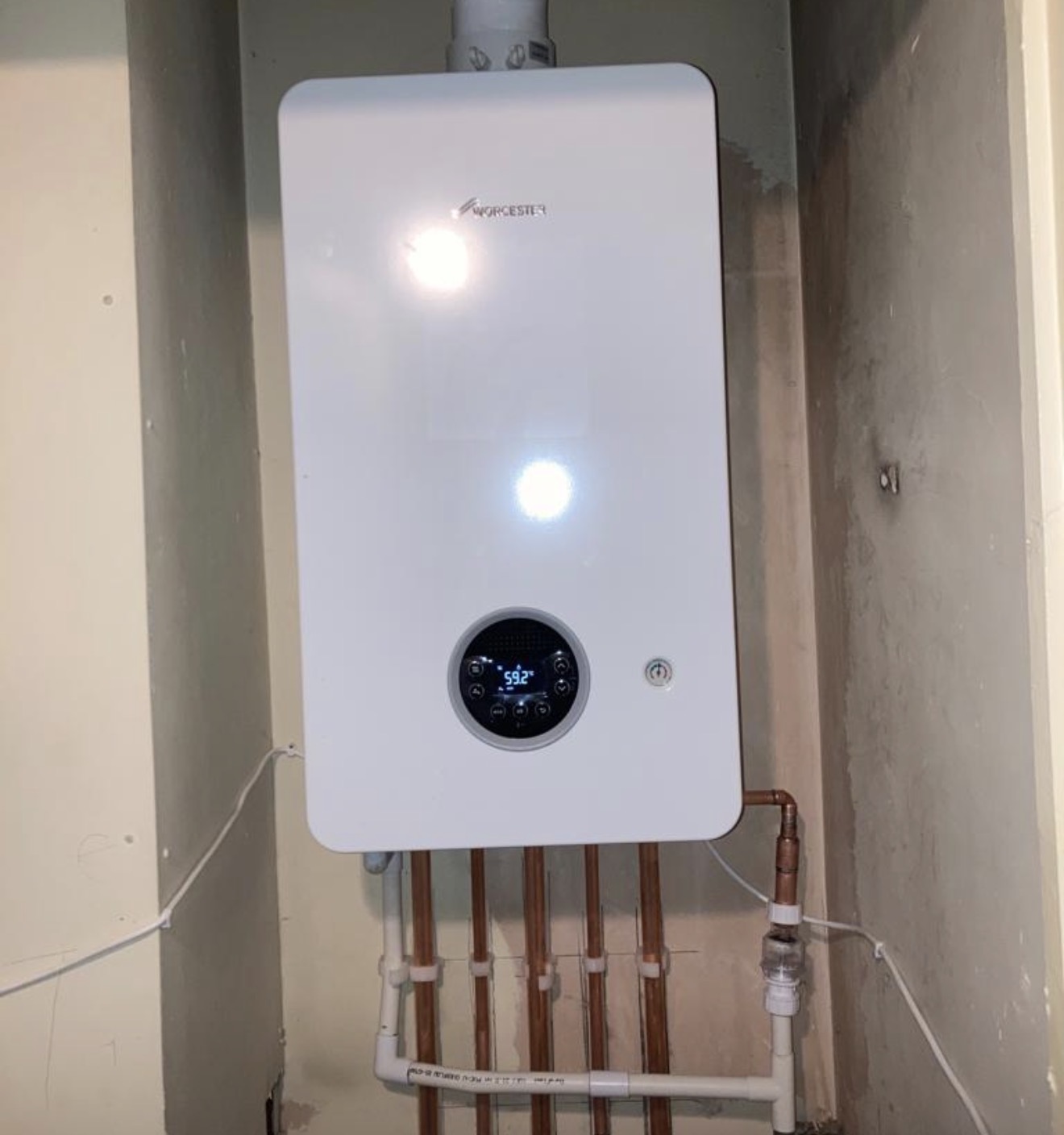
Condensing boilers produce water that drains through a plastic pipe, often running outside to a drain. If that water freezes, it backs up and the boiler locks out. Signs include a gurgling noise, a fault code mentioning the condensate or flame, and freezing temperatures overnight.
Safe thawing (only the outside plastic pipe)
If you're comfortable doing so:
- Find the plastic pipe leaving the boiler and follow it to the outside.
- Pour warm — not boiling — water slowly along the pipe, or hold a warm hot-water bottle against it.
- Once it's clear, reset the boiler following the manufacturer's instructions.
- Never open the boiler casing or touch gas parts — that's work for a Gas Safe registered engineer.
Stopping it next winter
The best fix is to route the condensate internally to a sink waste or soil pipe. Where it must run outside, it should be a larger diameter, as short as possible, insulated and with a steady fall. These changes are quick to make during a service or new installation.
When to call us
If thawing doesn't clear the fault, you smell gas, or you see water leaking from the boiler itself, call a professional. If you smell gas, call the National Gas Emergency number on 0800 111 999 first.
For appliance-specific steps, follow your boiler or product manual. Work inside a gas boiler must be left to a Gas Safe registered engineer.