
Repeated pressure loss needs investigation: look for visible leaks and follow your boiler manual rather than topping up indefinitely.
You refill the boiler. A few days later, the gauge has dropped again. That pattern is a clue, not a routine to get used to. Here’s what to look for in Castle Bromwich, Shard End and Chelmsley Wood homes.
Three things to know.
- Check the cold-pressure range in your boiler manual
- Check radiator valves for signs of moisture or crusting
- Top up the system after bleeding your radiators
What the gauge should read
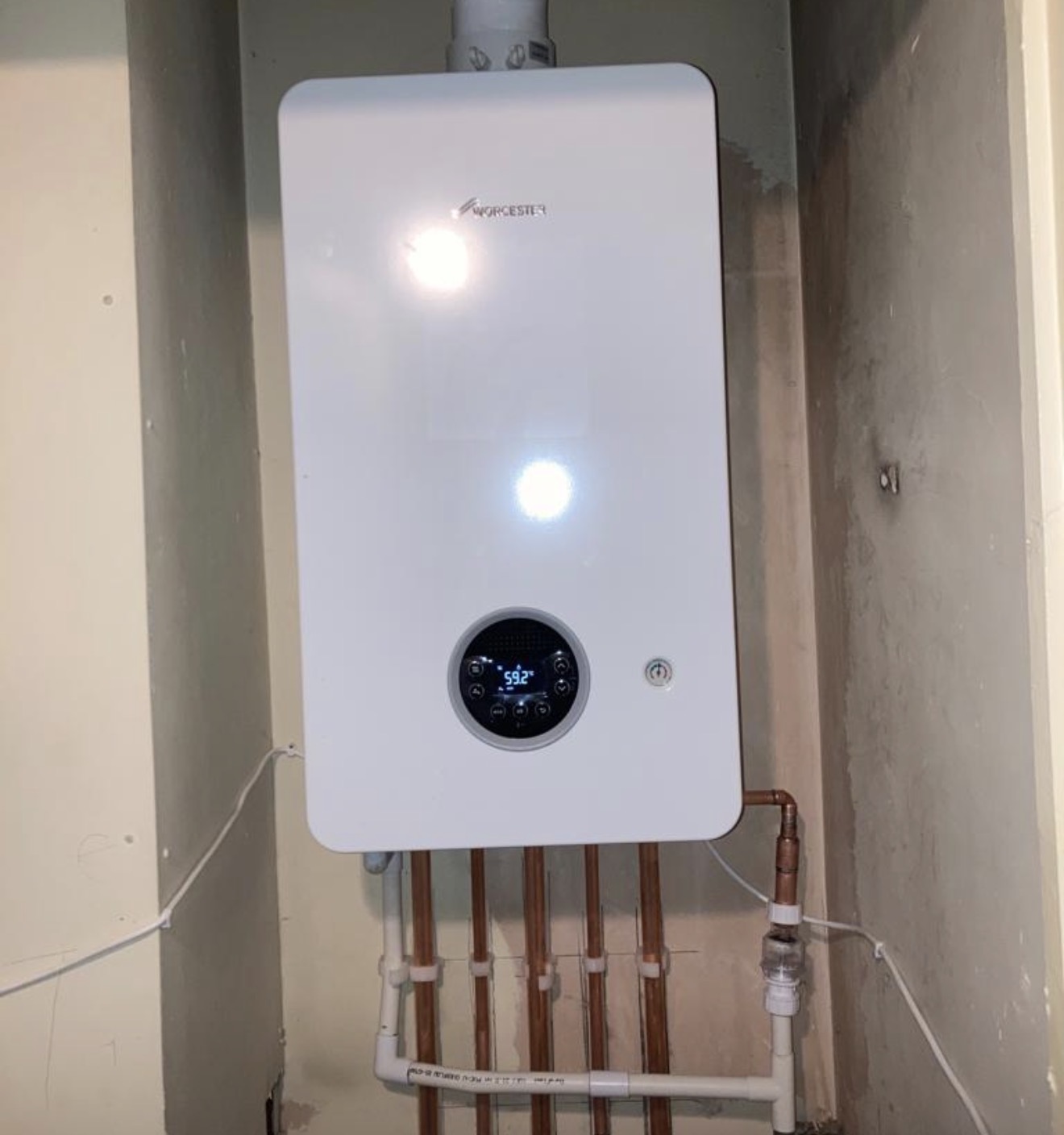
Most combi and system boilers like to sit at roughly 1 to 1.5 bar when the heating is cold. It will rise a little when the radiators warm up — that is normal. If it falls below about 0.5 bar many boilers lock out to protect themselves.
Your boiler manual shows the exact figures for your model; it is worth keeping it with the boiler.
Topping up with the filling loop
Most homes have a silver braided hose or a built-in key under the boiler. With the heating off, open both valves slowly, watch the gauge rise to around 1.2 bar, then close them firmly. If the gauge keeps rising after you close them, a valve is passing and needs attention.
Common reasons pressure drops
If you are topping up more than once every few months, look for one of these:
- A weeping radiator valve — check for green or white crusting under each radiator.
- Recently bled radiators — releasing air also lowers pressure, so a top-up after bleeding is normal.
- A dripping pressure relief pipe — a small copper pipe leaving through the outside wall near the boiler.
- A tired expansion vessel inside the boiler, which makes pressure swing high when hot and low when cold.
- A hidden leak under floorboards, common in the 1950s–60s houses around Shard End and Hodge Hill where pipes run in screed.
When to call an engineer
If the pressure falls quickly, the relief pipe is dripping, or you notice damp patches on ceilings or floors, book a Gas Safe engineer. Work inside the boiler casing must only be done by a registered engineer.
For appliance-specific steps, follow your boiler or product manual. Work inside a gas boiler must be left to a Gas Safe registered engineer.